


Mechanical Seals For Pumps
What Is Mechanical Seals for Pumps?
Mechanical seals for pumps are a key component in pump systems. These devices maintain the integrity of the pump system by preventing fluid leakage and keeping contaminants out. Mechanical seal systems are used in a variety of seal designs to detect leaks, control the sealing environment, and lubricate secondary seals.
Reduced friction and loss of power
The faces of mechanical seals for pumps are kept lubricated with a film of fluid. This combined with the perfect spacing between the faces makes for less friction which means you lose less power.
Zero product leakage
The main purpose of mechanical seals for pumps is preventing pumped fluid from leaking. While there is room for error sometimes, this can be prevented by proper installation and venting.
Elimination of excessive wear
An accurately installed mechanical seal can help protect your equipment. Clear guidelines are in place for alignment, impeller positioning and the like, which bring stability and extend the life of your equipment.
Maintenance reduced
When correctly aligned, without vibrations, and at the right temperature, mechanical seals are extremely durable and easily repaired in case of issues. Fixing a mechanical seal is relatively low cost as well.
Long term cost effectiveness
Fewer fluids lost in leaks means significant savings that come from less waste, a reduction of pump failures, and easier maintenance. They also reduce the hazards to pump operators and bring associated health, safety, and environmental benefits.

Single face
Unbalanced type
Arbitrary rotation
According with EN12756 (DIN24960) standard

Double face
Unbalanced type
Arbitrary rotation
Multi spring structure
With the "KU7" series of the same design performance, in addition to the installation length of the drive seat, the other installation size (d1<100mm) in line with DIN24960 standards.

Single face
Balanced type
Arbitrary rotation
According with DIN24960 standard
KB7 series seal is widely used, good interchangeability. The static ring adopts floating type, the installation is convenient, and the pushing ring is jammed by the transmission lug to prevent the spring from falling out.
Other special techniques include static ring limit and limit spring travel to avoid excessive wear.
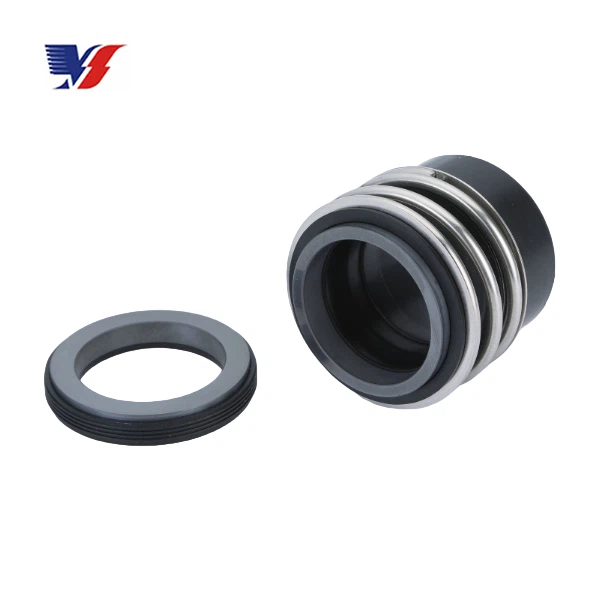
Structure: Single End
Pressure: Medium Pressure Mechanical Seals
Speed: General Speed Mechanical Seal
Temperature: Temperature Mechanical Seal
Performance: Wear
Standard: DIN24960, ISO3069, GB6556, EN12756
Model NO.: MG12
Balance: Unbalanced
Specification: Inner Diameter: 10 mm to 110 mm

MEDIUMS: Water, oil and weakly-corrosive mediums
Temperature: -20℃-150℃
Pressure: ≤0.8MPA
Speed: ≤10m/sec

Teflon bellow mechanical seal GD-WB2.
Operating parameters
Temperature: -20 - 120℃
Speed: ≤10m/s
Pressure: ≤0.5Mpa
Combined materials
Rotary face: Carbon/Sic/Glass filled PTFE
Stationary Ring: Ceramic/Sic
Applications
Fluids of Strong corrosive

Mechanical Seal for Centrifugal Pump
Double face
Balanced type
Arbitrary rotation
Multi spring structure
KB74D series seal is widely used, good interchangeability. The static ring adopts floating type, the installation is convenient, and the pushing ring is jammed by the transmission lug to prevent the spring from falling out. Other special techniques include static ring limit and limit spring travel to avoid excessive wear.

Mechanical Seal for Water Pump
Single face
Unbalanced type
Arbitrary rotation
According with EN12756 (DIN24960) standard
KU74 series of wide application, strong interchangeability, tight sealing ring embedded, easy replacement. The push ring is jammed by the driving lug to prevent the spring from falling off. The static ring can be limited, the spring travel is limited, so as to avoid excessive wear of the carbon ring.

Types Of Mechanical Seals for Pumps
Single end balance type multi spring sealing structure for auxiliary sealing rubber O ring, the structure is simple and reliable, it is the balance of the structure of KU8, can be used in a high pressure, is also a common type of sealing, suitable for sealing the neutral or weak corrosive medium, such as oil, water, etc.
Our factory
Gaodao Sealing Technology (Suzhou) Co., Ltd. was established in 2021 with a registered capital of 12 million yuan. It is a member unit of the China General Machinery Industry Association and has been successfully selected as one of the first batch of innovative and entrepreneurial leading talent enterprises in Gusu in 2022.
Advanced equipment
Our company has domestically advanced production, manufacturing and testing equipment, as well as professional technical personnel.
High quality
The company adopts an ERP management system, using scientific methods and data analysis to provide customers with high-quality products and stable delivery cycles.
Production market
In 2023, our company's total marketing revenue was 39.5 million yuan, providing strong support for the needs of major host factories, equipment factories, and end users nationwide.
24H online service
We try and respond to all concerns within 24 hours and our teams are always at your disposal in case of any emergencies.
Types of Mechanical Seals for Pumps

Inside seals: An inside seal is designed in such a way that the rotary portion of the mechanical seal is located inside the pump seal chamber. With inside seals, the fluid and pressure are exerted on the outside diameter (O.D.) of the seal. Typically, inside seals are used for higher pressure applications compared to outside seals.
Outside seals: An outside seal is designed in such a way that the rotary portion of the mechanical seal is located outside the pump seal chamber. Quite often, outside seals are applied for chemical service in non-metallic parts: the pumped fluid does not come in contact with the metal parts of the seal and as a result, the need for expensive and/or exotic materials is often eliminated.
Pusher seals: A pusher seal is a design which pushes a dynamic secondary seal, which is either an o-ring, wedge or other type of equipment, across the shaft as a means of compensation for face wear and/or shaft movement.
Non-pusher seals: This type of seal is designed in such a way that the dynamic secondary seal is not used. Typically, non-pusher seals are metal bellows or elastomeric bellow seals.
Balanced seals: At balanced seals, the hydraulic pressure which acts to close the seal faces is significantly reduced. Balanced seals present the advantage of generating less heat because of the reduced pressure forcing the faces together. Consequently, they can withstand much higher pressures compared to unbalanced seals.
Unbalanced seals: At unbalanced seals, the full hydraulic pressure of the seal chamber acts to close the mechanical seal faces, without any reduction whatsoever. Unbalanced seals are intended for use only in low-pressure applications.
Double seals: In this arrangement, two (2) mechanical seals are used face to face, back to back or in tandem (facing the same direction), thus allowing a buffer fluid or gas to be introduced between the two sets of seal faces.
Double seals are mostly used for the purpose of sealing a product that is a volatile organic compound, dirty,non-lubricating, or very viscous. Also, they are used for products that solidify or otherwise change state.

Industrial area
In the industrial area, mechanical seals for pumps are used in mixers, compressors, industrial centrifugal pumps and other machines that need a rotating shaft.
Automotive field
In the automotive field, mechanical seals for pumps are installed in engine cooling systems and air conditioning compressors.
Domestic applications
In more domestic applications, mechanical seals for pumps are found in water pumping systems and household appliances such as washing machines.
How to Choose a Mechanical Seals for Pumps
Type of fluid to be pumped
Choosing the right type of mechanical seal for pumps involves considering several factors. The type of fluid being pumped plays a crucial role in seal selection. Fluids with abrasive particles require seals designed for high resistance to wear and tear, while highly corrosive fluids necessitate corrosion-resistant materials like titanium, or ceramics. Toxic and hazardous fluids require seals that strictly prevent leakage to ensure safety and environmental protection.
Pump fluid pressure
The pressure of the pump fluid is another important consideration when choosing a mechanical seal. Lower pressure applications May suffice with unbalanced seals, which are less complex and more economical. However, as fluid pressure increases, balanced mechanical seals become necessary to handle higher pressures without excessive wear.
Temperature considerations
Temperature considerations play a crucial role in maintaining the integrity and function of the seal. The thermal properties of the pumped fluid and operating environment must align with the capabilities of the seal material. High temperatures can degrade seal components, while extremely low temperatures can cause materials to become brittle and crack. Matching the seal composition with the expected temperature range is crucial, taking into account factors such as heat tolerance thresholds for materials like silicon carbide, tungsten carbide, and viton. A balanced seal design often accommodates thermal expansion and contraction better than an unbalanced one, reducing temperature-induced stress.
In some cases, auxiliary cooling or heating provisions might be necessary. Seals in hot water service typically require external cooling to maintain optimal operating temperature, while cryogenic applications need heating arrangements to prevent ice formation that could obstruct movement or distort seal faces. Evaluating maximum and minimum temperature exposure during pump operation helps inform material selection and decisions on additional features like barrier fluids in double seals or buffer fluids that insulate single seals from extreme temperatures. It is crucial to ensure that mechanical seals can handle routine as well as extreme temperature conditions for reliable pump operation and extended equipment life.
Operator safety concerns
Operator safety should always be a paramount consideration when selecting mechanical seals for pumps. The chosen seal should not only prevent fluid leakage but also ensure the safe containment of hazardous or toxic fluids to mitigate health risks. For applications involving volatile organic compounds or other dangerous chemicals, double seals provide an additional layer of protection between the process fluid and the environment.
Cut the power
The first step is to power off the centrifugal motor so that it is not in motion. Shut down the main power supply and double-check that there is no chance of the machine starting up again. Once this is done, it's time to get to work!
Isolate the fluid from the pump
Shut both inlet and outlet isolation valves and then drain the pump casing by removing the casing drain plug.
Disconnect the centrifugal pump
If your pump is a 'back pull-out' design, remove the spacer element in the pump coupling. Then remove the casing bolts and slide the remainder of the pump away from the casing. You are now able to access the mechanical seal without having to disconnect the casing from the inlet and outlet piping.
If the pump is not a 'back pull-out' design, you will need to disconnect the complete pump after disconnecting the coupling between the pump and motor shaft.
If the pump is a close coupled design (the pump uses the shaft of the motor as its shaft and the motor directly bolts onto the back of the pump), you will need to remove the entire pump/motor. Remove the casing bolts and remove the casing.
Remove the impeller
The mechanical seal is located behind the impeller on the pump shaft. Impellers are either screwed onto the shaft or held in place via a bolt. To remove the screwed-on impeller from the shaft, use a wrench to hold the shaft in place and rotate the impeller clockwise until it is completely unscrewed. To remove a bolted impeller, hold the shaft in place and remove the bolt.
Detach the seal
You can now directly access both the rotary and stationary seal parts. The rotary parts are typically held in place along the shaft using set screws. Remove the set screw and slide off the rotary seal parts. Remove the stationary part of the seal from the casing or seal chamber bore.
Replace the seal
Now it's time to place a new mechanical seal onto the shaft. Carefully slide the replacement seal parts along the shaft. Using a new o-ring or gasket material, press the stationary part into the casing or seal chamber bore. Follow the instructions for setting the rotary portion back onto the shaft correctly. This is a crucial step.
Install the impeller
Use your wrench to hold the shaft in place while you screw the impeller onto the pump's shaft using a new impeller o-ring or gasket. Or use the impeller bolt and a new o-ring or gasket to attach the impeller to the end of the shaft.
Reconnect the casing using the original casing bolts
For back pull-out designs, slide the back pull-out assembly up against the installed casing and bolt it in place. Checking pump alignment will be necessary after step 9 below. For close coupled or non-back pull-out designs, reinstall the casing using the casing bolts. In all cases, torque the casing bolts in accordance with the pump installation, operation, and maintenance (iom) manual.
Reconnect the pump
For back pull-out designs, the only steps remaining are to reinstall the spacer element to the existing coupling hubs along the pump and motor shaft, and make sure the mounting feet of the back pull-out assembly are bolted back into place on the pump baseplate. Realign the pump and motor. For close-coupled pumps, place the pump back and reconnect the inlet and outlet piping. For non-back pull-out pump and motor designs, replace the pump on the baseplate, reconnect the inlet and outlet piping, re-bolt the pump to the baseplate, reconnect the coupling and then realign the pump and motor.
Restart the machine
Make sure you have refilled the pump casing by opening the inlet and outlet isolation valves. Some pump designs will require venting, so refer to your pump IOM. Before starting the pump, it is always a good idea to re-verify the rotation of the motor to make sure it is correct. This is done before reconnecting the pump and motor coupling. Bump the motor and verify rotation. Then reconnect the coupling, and the pump is ready to start.
Take proper safety precautions
Always review safety precautions found in the pump IOM. Always use the pump IOM when working on any pump. Install the mechanical seals using the specific instructions from the mechanical seal manufacturer. Lastly, always make sure the pump and motor are realigned within 001" – 002". Misalignment will cause premature mechanical seal failure.
Leakage
This is the most common and obvious sign. If you notice fluid leaking from the seal area of your pump, it's likely that the mechanical seal is damaged or worn out.
Excessive vibration
While some vibration is normal, excessive or unusual vibration can indicate a problem with the mechanical seal. This could be due to misalignment or imbalance in the seal or pump.
Overheating
If your pump is overheating, it could be a sign that the mechanical seal is not functioning properly. A bad seal can cause friction, leading to increased heat.
Decreased pump performance
If you notice a drop in the pump's performance or efficiency, it could be due to a failing mechanical seal. This could manifest as reduced flow rate or pressure.
Unusual noise
Any unusual or excessive noise coming from the pump could indicate a problem with the mechanical seal. This could be due to wear, damage, or improper installation of the seal.
Our Factory

Gaodao Sealing Technology (Suzhou) Co., Ltd. was established in 2021 with a registered capital of 12 million yuan. It is a member unit of the China General Machinery Industry Association and has been successfully selected as one of the first batch of innovative and entrepreneurial leading talent enterprises in Gusu in 2022.
The company currently has nearly 70 employees, including 12 technical engineers and 5 university and industry consultants. The company adopts an ERP management system, using scientific methods and data analysis to provide customers with high-quality products and stable delivery cycles. Having advanced domestic production, manufacturing, testing equipment, and professional technical personnel.
FAQ
Hot Tags: mechanical seals for pumps, China mechanical seals for pumps manufacturers, suppliers, factory, filtration system mechanical seal, precision mechanical seal, Non Cartridge Mechanical Seal, durable mechanical seal, rotary mechanical seal, rotary lobe compressor mechanical seal
You Might Also Like


Send Inquiry