


Teflon Bellow Mechanical Seal
What Is Teflon Bellow Mechanical Seal?
The Teflon bellow mechanical seal design faces are made of glass-filled PTFE, are designed to handle highly corrosive liquids. These mechanical seals are mounted externally with a push-on installation procedure and are therefore cost-effective for corrosive media sealing. They are specified as fixed and replaceable bellows faces respectively. For the replaceable version, there is flexibility in the choice of the face material as the sealing medium, it can be easily dismantled and replaced, and is ideal in severe applications.
Exceptional chemical resistance
One of the most significant benefits is their ability to withstand extreme temperatures and corrosive environments. The use of Teflon as a primary material in these seals provides exceptional resistance to chemicals, making them suitable for use in a wide range of industrial applications.
Increased reliability and longevity
Teflon bellow mechanical seals exhibit minimal friction and wear, contributing to extended service life and reduced maintenance requirements. This combination of attributes makes them an ideal choice for demanding operating conditions, where conventional seals May fail to perform effectively.
Excellent sealing capabilities
Teflon bellow mechanical seals are known for their excellent sealing capabilities, effectively preventing leakage and minimizing the risk of contamination in sensitive processes. Their tight and reliable seal ensures the integrity of the systems in which they are installed, contributing to overall operational efficiency and safety.
Versatility
Another advantage of Teflon bellow mechanical seals is their versatility and compatibility with a wide range of fluids and gases. The non-reactive nature of Teflon allows these seals to be used with various substances without the risk of material degradation or chemical interaction. This versatility makes them suitable for use in diverse industries, from petrochemicals and mining to water treatment and wastewater management. The ability of Teflon bellow mechanical seals to accommodate different operating conditions and media further enhances their appeal as a sealing solution for industrial processes.

Single face
Unbalanced type
Arbitrary rotation
According with EN12756 (DIN24960) standard

Double face
Unbalanced type
Arbitrary rotation
Multi spring structure
With the "KU7" series of the same design performance, in addition to the installation length of the drive seat, the other installation size (d1<100mm) in line with DIN24960 standards.

Single face
Balanced type
Arbitrary rotation
According with DIN24960 standard
KB7 series seal is widely used, good interchangeability. The static ring adopts floating type, the installation is convenient, and the pushing ring is jammed by the transmission lug to prevent the spring from falling out.
Other special techniques include static ring limit and limit spring travel to avoid excessive wear.
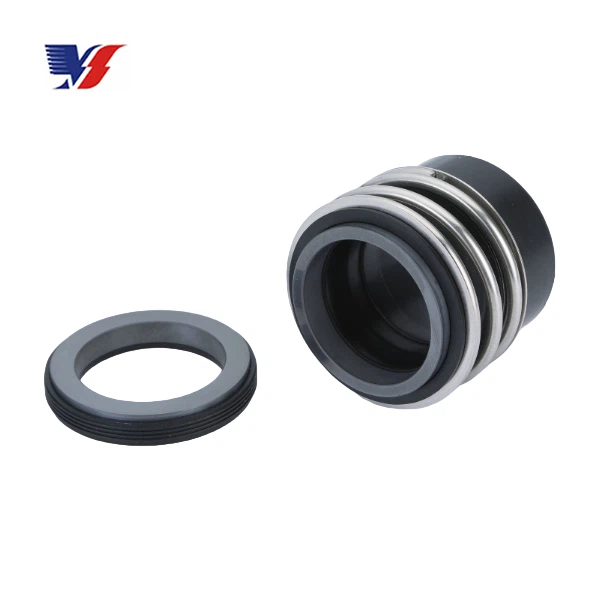
Structure: Single End
Pressure: Medium Pressure Mechanical Seals
Speed: General Speed Mechanical Seal
Temperature: Temperature Mechanical Seal
Performance: Wear
Standard: DIN24960, ISO3069, GB6556, EN12756
Model NO.: MG12
Balance: Unbalanced
Specification: Inner Diameter: 10 mm to 110 mm

MEDIUMS: Water, oil and weakly-corrosive mediums
Temperature: -20℃-150℃
Pressure: ≤0.8MPA
Speed: ≤10m/sec

Teflon bellow mechanical seal GD-WB2.
Operating parameters
Temperature: -20 - 120℃
Speed: ≤10m/s
Pressure: ≤0.5Mpa
Combined materials
Rotary face: Carbon/Sic/Glass filled PTFE
Stationary Ring: Ceramic/Sic
Applications
Fluids of Strong corrosive

Mechanical Seal for Centrifugal Pump
Double face
Balanced type
Arbitrary rotation
Multi spring structure
KB74D series seal is widely used, good interchangeability. The static ring adopts floating type, the installation is convenient, and the pushing ring is jammed by the transmission lug to prevent the spring from falling out. Other special techniques include static ring limit and limit spring travel to avoid excessive wear.

Mechanical Seal for Water Pump
Single face
Unbalanced type
Arbitrary rotation
According with EN12756 (DIN24960) standard
KU74 series of wide application, strong interchangeability, tight sealing ring embedded, easy replacement. The push ring is jammed by the driving lug to prevent the spring from falling off. The static ring can be limited, the spring travel is limited, so as to avoid excessive wear of the carbon ring.

Types Of Mechanical Seals for Pumps
Single end balance type multi spring sealing structure for auxiliary sealing rubber O ring, the structure is simple and reliable, it is the balance of the structure of KU8, can be used in a high pressure, is also a common type of sealing, suitable for sealing the neutral or weak corrosive medium, such as oil, water, etc.
Our factory
Gaodao Sealing Technology (Suzhou) Co., Ltd. was established in 2021 with a registered capital of 12 million yuan. It is a member unit of the China General Machinery Industry Association and has been successfully selected as one of the first batch of innovative and entrepreneurial leading talent enterprises in Gusu in 2022.
Advanced equipment
Our company has domestically advanced production, manufacturing and testing equipment, as well as professional technical personnel.
High quality
The company adopts an ERP management system, using scientific methods and data analysis to provide customers with high-quality products and stable delivery cycles.
Production market
In 2023, our company's total marketing revenue was 39.5 million yuan, providing strong support for the needs of major host factories, equipment factories, and end users nationwide.
24H online service
We try and respond to all concerns within 24 hours and our teams are always at your disposal in case of any emergencies.

Teflon bellow mechanical seal is widely used in various production sectors that deal with highly corrosive materials. It includes Chemical processing, Petrochemical, Pharmaceutical and Food processing industries. This high chemical stability makes them ideal for sealing processes that require an interaction with acids, alkalis and oxidizing agents hence their common use.
The Teflon bellow mechanical seal is very efficient in sealing devices like pumps, mixers and valves. Many mechanical seal suppliers use it to minimize leakage in systems that process hazardous or abrasive products. These seals have the capacity to endure heat and pressure together with chemical erosion, which makes them relevant in critical industrial applications.
How to Maintain Teflon Bellow Mechanical Seal
Inspect and clean regularly
Regular inspection and cleaning are crucial for detecting any signs of wear, damage, or leaks in Teflon bellow mechanical seals. Set up a maintenance schedule to inspect the seals at regular intervals. Use appropriate cleaning agents and methods to remove any accumulated dirt or residue. Inspecting and cleaning the seals will help identify any potential issues early on and prevent them from progressing into more significant problems.
Monitor operating conditions
Proper monitoring of the operating conditions is essential for maintaining Teflon bellow mechanical seals. Check factors such as temperature, pressure, and speed regularly to ensure they are within the recommended limits. Operating conditions outside the specified ranges can put excessive stress on the seal, leading to premature wear or failure. Monitoring these conditions will help identify any deviations and prompt necessary adjustments to ensure optimal performance.
Check and replace sealing components
Certain components of Teflon bellow mechanical seals, such as o-rings or gaskets, May require periodic replacement. These components are vital for creating a reliable seal and preventing leaks. Regularly inspect these parts for signs of wear, cracks, or deterioration. If any issues are detected, promptly replace the worn or damaged components with new ones recommended by the manufacturer. By regularly checking and replacing sealing components, you can maintain the integrity of the seal and avoid potential leaks.
Implement proper storage and handling procedures
Proper storage and handling of Teflon bellow mechanical seals are essential to preserve their quality and performance. Store the seals in a clean and dry area, away from direct sunlight and extreme temperatures. Avoid stacking or placing heavy objects on top of the seals to prevent any distortions or damage. When handling the seals, ensure that hands or tools are clean to avoid introducing contaminants. By implementing these proper storage and handling procedures, you can extend the lifespan of the seals and maintain their integrity.
Proper seal selection
Always ensure that the seal materials are compatible with the process fluid and the operating temperature range.
Appropriate lubrication
Ensure that the seal faces are properly lubricated. Some seals operate with a fluid film between the faces, which provides both lubrication and cooling.
Cooling systems
Some mechanical seals require external cooling systems, especially in high-temperature applications. This could be in the form of a quench fluid, seal pot, or cooling jacket.
Monitor equipment
Regularly monitor equipment for signs of overheating. This could be done with temperature sensors, infrared thermography, or by manual inspections.
Barrier or buffer fluids
Dual mechanical seals can use barrier or buffer fluids, which provide lubrication and cooling to the seal faces.
Regular maintenance and inspection
Regularly inspect seals for wear and damage. Replace worn components promptly and ensure that the seal assembly is correctly set up, with proper face loading and spring compression.
Adequate flush plans
Implementing appropriate API flush plans can help in providing clean and cool fluid to the seal, thereby reducing the chances of overheating.
Teflon bellow mechanical seals: Addressing challenges in chemical processing

The challenges in chemical processing
Chemical processing presents a unique set of challenges for mechanical seals. The aggressive nature of many chemicals can cause corrosion and erosion of seal components, leading to seal failure and leakage. Additionally, the high temperatures and pressures often encountered in chemical processing can further exacerbate these issues. Furthermore, the presence of abrasive particles, solids, and slurry in some processes can accelerate seal wear and compromise sealing integrity.
Addressing corrosion and erosion
One of the primary advantages of Teflon bellow mechanical seals is their exceptional resistance to corrosion and erosion. Teflon is highly inert and non-reactive, making it impervious to a wide range of aggressive chemicals, including acids, bases, and solvents. This inherent chemical resistance allows Teflon bellow seals to maintain their sealing integrity even when exposed to highly corrosive process fluids, effectively preventing the leakage of hazardous substances.
The unique design of Teflon bellow seals also contributes to their ability to withstand corrosion and erosion. The flexible, convoluted bellow structure of these seals accommodates radial and axial shaft movement, reducing the stress and wear on the seal faces. This innovative design minimizes the potential for seal damage and extends the operational life of the seals in corrosive environments.
Enhanced performance in extreme conditions
In chemical processing, equipment is often subjected to extreme temperatures and pressures, which can push traditional mechanical seals beyond their limits. Teflon bellow mechanical seals are specifically engineered to perform reliably in these demanding conditions. The exceptional temperature resistance of Teflon allows these seals to maintain their sealing properties across a wide range of temperatures, from cryogenic to high heat applications.
Similarly, the high-pressure capabilities of Teflon bellow seals make them well-suited for use in chemical processing equipment operating under challenging pressure conditions. The robust construction of these seals ensures that they can effectively contain process fluids and prevent leakage, even at elevated pressures. This high-performance sealing solution provides peace of mind to chemical processing operators, knowing that their equipment is equipped to handle extreme operating conditions without compromising safety or reliability.
Handling abrasive and solid-laden fluids
In some chemical processing applications, the presence of abrasive particles, solids, or slurry can pose a significant challenge for mechanical seals. The abrasion and wear caused by these substances can compromise the sealing surfaces and lead to premature seal failure. Teflon bellow mechanical seals offer a solution to this problem through their resilient and durable construction.
The flexibility and resilience of the Teflon bellow design allow these seals to accommodate the presence of solids and abrasive particles without sacrificing sealing performance. The convoluted bellow structure effectively isolates the sealing faces from the abrasive fluid, minimizing wear and extending the operational life of the seals. This capability makes Teflon bellow seals an ideal choice for chemical processing equipment that handles abrasive or solid-laden fluids, providing reliable sealing performance and reduced maintenance requirements.
How to Install The Teflon Bellow Mechanical Seal
Inspect the seal and equipment
Before installing a Teflon bellow mechanical seal, thoroughly inspect the seal and the equipment components. Ensure that all surfaces are clean and free from debris, scratches, or damage. Check for dimensional accuracy and compatibility of the seal with the equipment. Any discrepancies or defects must be addressed before proceeding with the installation.
Apply proper lubrication
To ensure smooth operation and prevent damage to the seal faces, apply an appropriate lubricant compatible with the sealing materials. Lubrication serves as a boundary layer between the faces, reducing friction and wear. It is essential to use a lubricant recommended by the seal manufacturer and to follow the specified quantity and application method.
Follow correct assembly sequence
Follow the recommended assembly sequence provided by the seal manufacturer. Improper assembly can lead to seal failure or premature wear. Make sure to install the seal in the correct orientation and position, ensuring that all components align properly. Refer to the manufacturer's guidelines for specific instructions regarding tightening torque and any additional requirements during assembly.
Perform necessary adjustments
After installing the Teflon bellow mechanical seal, perform any necessary adjustments to ensure a proper fit. Verify the seal alignment, face parallelism, and axial movement. Adjust any misalignments or deviations as per the manufacturer's instructions. This step is crucial for optimal sealing performance and to prevent unnecessary stress on the seal faces.
Conduct thorough testing and inspection
Once the Teflon bellow mechanical seal is installed, conduct thorough testing and inspection to ensure its functionality. Check for any leakage or abnormal operation. Monitor operating parameters such as temperature and pressure to ensure they fall within the recommended range. Regular inspection and maintenance should be performed as per the manufacturer's guidelines to identify and address any potential issues promptly.
Our Factory

Gaodao Sealing Technology (Suzhou) Co., Ltd. was established in 2021 with a registered capital of 12 million yuan. It is a member unit of the China General Machinery Industry Association and has been successfully selected as one of the first batch of innovative and entrepreneurial leading talent enterprises in Gusu in 2022.
The company currently has nearly 70 employees, including 12 technical engineers and 5 university and industry consultants. The company adopts an ERP management system, using scientific methods and data analysis to provide customers with high-quality products and stable delivery cycles. Having advanced domestic production, manufacturing, testing equipment, and professional technical personnel.
FAQ
Hot Tags: teflon bellow mechanical seal, China teflon bellow mechanical seal manufacturers, suppliers, factory, Rubber Bellow Mechanical Seal, Seal For Pump, heat exchanger mechanical seal, universal mechanical seal, Teflon Bellow Mechanical Seal, agitator mechanical seal
You Might Also Like


Send Inquiry