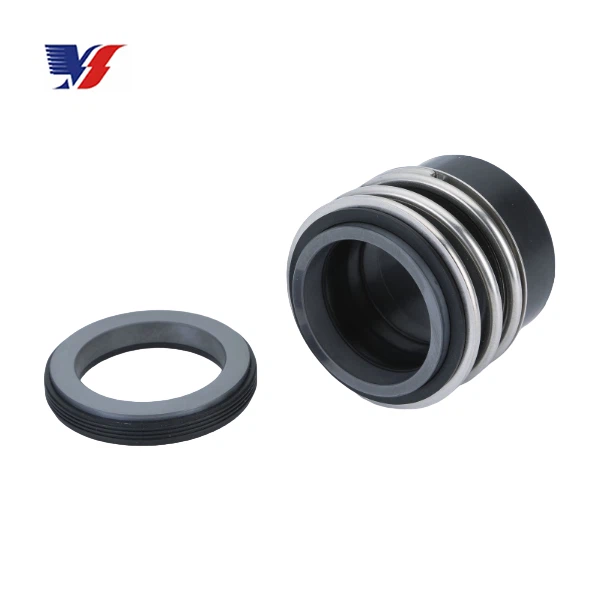
What Is Universal Mechanical Seal?


Universal mechanical seal is a device used to prevent fluid leakage between rotating and stationary parts in machinery. It is an essential component in pumps, mixers, and other equipment where a shaft rotates through a stationary housing.


Advantages of Universal Mechanical Seal


Reduction of friction and power loss: Universal mechanical seal remain lubricated and have perfect space between them. This results in less friction which results in less power loss.


Long-term profitability: By guaranteeing a superior seal than other sealing systems, the loss of fluid is much lower. This means that there are fewer breakdowns and less waste generated.


Reduced maintenance: When properly aligned, without vibrations and at the right temperature, universal mechanical seals are extremely durable and easy to repair in case of failure. Moreover, the cost of most mechanical seal’s repairs is relatively low.


Elimination of excessive wear: A properly installed universal mechanical seal can help protect your equipment. There are clear guidelines for alignment, impeller positioning and other similar things, which add stability and extend equipment life.


Total reduction of leaks: Universal mechanical seal offer a complete sealing, preventing leaks.


  • Teflon Bellow Mechanical Seal

    The Teflon bellow mechanical seal design faces are made of glass-filled PTFE, are designed to handle highly corrosive liquids.

  • Rubber Bellow Mechanical Seal

    Rubber bellow mechanical seal is sealing devices that use a flexible rubber bellow to provide a sealing force on a stationary sealing element.

  • Mechanical Seals For Pumps

    Mechanical seals for pumps are a key component in pump systems. These devices maintain the integrity of the pump system by preventing fluid leakage and keeping contaminants out.

  • Metal Mechanical Seal

    Single face. Unbalanced type. Arbitrary rotation. According with EN12756 (DIN24960) standard

  • Non Cartridge Mechanical Seal

    Double face. Unbalanced type. Arbitrary rotation. Multi spring structure. With the KU7 series of the same design performance, in addition to the installation length of the drive seat, the other

  • Elastomer Mechanical Seal

    Single face. Balanced type. Arbitrary rotation. According with DIN24960 standard. KB7 series seal is widely used, good interchangeability. The static ring adopts floating type, the installation is

  • Rubber Bellow Mechanical Seal

    Structure: Single End. Pressure: Medium Pressure Mechanical Seals. Speed: General Speed Mechanical Seal. Temperature: Temperature Mechanical Seal. Performance: Wear. Standard: DIN24960, ISO3069,

  • Rubber Bellow Seal

    MEDIUMS: water, oil and weakly-corrosive mediums. Temperature: -20℃-150℃. Pressure: ≤0.8MPA. Speed: ≤10m/sec

  • Teflon Bellow Mechanical Seal

    Teflon bellow mechanical seal GD-WB2.. Operating parameters. Temperature: -20 - 120℃. Speed: ≤10m/s. Pressure: ≤0.5Mpa. Combined materials. Rotary face: Carbon/Sic/Glass filled PTFE. Stationary Ring:

  • Teflon Bellow Seal

    Externally installed as a single end multi spring PTFE sylphon bellows structure. Both the dynamic and static rings are made of corrosion-resistant hard alloy or silicon carbide

  • Mechanical Seal for Water Pump

    Single face. Unbalanced type. Arbitrary rotation. According with EN12756 (DIN24960) standard. KU74 series of wide application, strong interchangeability, tight sealing ring embedded, easy

  • Mechanical Seals for Pumps

    The utility model has the advantages that the single end face is an unbalanced multi spring sealing structure, the auxiliary seal is a rubber O ring, the structure is simple and reliable, and the

First 12 Last
Why Choose Us


Our factory
Gaodao Sealing Technology (Suzhou) Co., Ltd. was established in 2021 with a registered capital of 12 million yuan. It is a member unit of the China General Machinery Industry Association and has been successfully selected as one of the first batch of innovative and entrepreneurial leading talent enterprises in Gusu in 2022.


Advanced equipment
Our company has domestically advanced production, manufacturing and testing equipment, as well as professional technical personnel.


High quality
The company adopts an ERP management system, using scientific methods and data analysis to provide customers with high-quality products and stable delivery cycles.


Production market
In 2023, our company's total marketing revenue was 39.5 million yuan, providing strong support for the needs of major host factories, equipment factories, and end users nationwide.


24H online service
We try and respond to all concerns within 24 hours and our teams are always at your disposal in case of any emergencies.


Types of Universal Mechanical Seal
 

Single spring mechanical seals:
This type of seal consists of a single spring that applies pressure to the seal faces to create a tight seal. It is a simple and cost-effective option and is commonly used in low-pressure and low-temperature applications.


Multi-spring mechanical seals:
This type of seal consists of multiple springs arranged in a circular pattern. The springs work together to create a more even pressure distribution across the seal faces, which can improve the seal's performance and durability. Multi-spring seals are used in a wide range of applications, including high-pressure and high-temperature environments.


Cartridge mechanical seals:
Cartridge seals are pre-assembled and can be easily installed into the equipment without the need for complex alignment or adjustment. They are typically more expensive than other types of seals, but they offer ease of installation, reduced downtime and improved seal performance.

Teflon Bellow Mechanical Seal


Rubber Bellow Mechanical Seal

Metal bellows mechanical seals:
This type of seal uses thin metal bellows instead of a spring to apply pressure to the seal faces. Metal bellows seals are highly effective in applications with high pressures, temperatures or corrosive fluids, as they can withstand extreme conditions.


Elastomeric bellows mechanical seals:
Elastomeric bellows seals are similar to metal bellows seals, but they use a flexible elastomer instead of metal bellows. They are a cost-effective alternative to metal bellows seals and are commonly used in low-pressure and low-temperature applications.


Split mechanical seals:
Split seals are designed to be split into two halves, which can be easily installed around the equipment shaft without the need for disassembly of the equipment. They are commonly used in applications where the equipment cannot be easily disassembled for seal replacement.


Components of Universal Mechanical Seal
 
Main sealing elements

Rotating ring: Rotates with the shaft and closely adheres to the stationary ring to form a sealing surface to prevent medium leakage. It is usually made of wear-resistant materials such as silicon carbide and cemented carbide.

Stationary ring: Fixed on the sealing cavity and is relatively stationary to the rotating ring. It also uses wear-resistant and corrosion-resistant materials and cooperates with the rotating ring to achieve the sealing function.

Auxiliary sealing elements

Sealing ring: Including rotating ring sealing ring and stationary ring sealing ring. The rotating ring sealing ring mainly prevents leakage between the rotating ring and the shaft, and the stationary ring sealing ring prevents leakage between the stationary ring and the sealing cavity. Generally, it is made of elastic materials such as rubber and polytetrafluoroethylene.

Elastic elements

Spring: Provides axial force to make the rotating ring and the stationary ring closely fit. The elastic force of the spring should be moderate. If it is too small, it will lead to poor sealing. If it is too large, it will increase friction and wear. In addition, there are other forms of elastic elements such as bellows.

Transmission parts

Transmission pins, transmission seats, etc.: Used to transmit the rotation of the shaft to the rotating ring and make the rotating ring rotate with the shaft. The transmission parts should ensure synchronous rotation of the rotating ring and the shaft and at the same time not affect the sealing performance.


How to Maintain Universal Mechanical Seal
Rubber Bellow Mechanical Seal
MG12-02
KU74D-002
Non Cartridge Mechanical Seal

Follow manufacturer’s guidelines: Start by closely following the manufacturer's maintenance guidelines, which detail specific procedures for each mechanical seal model. This includes recommended maintenance intervals and critical operating parameters.


Performance monitoring: Always be vigilant. Routinely inspect the mechanical seal, looking out for signs of wear, damage, or leakage. Unusual vibrations or sounds can often hint at seal complications.


Lubrication is key: A well-lubricated mechanical seal is vital. Proper lubrication minimizes friction and averts overheating. Always use the lubricants suggested by the manufacturer.


Clean seal faces: Keep contaminants at bay. A speck of debris can lead to abrasion, accelerating the wear and tear of the seal.


Leakage addressal: Address any excessive leakage promptly. It might be indicative of other issues like misalignment or worn-out components.


Manage vibrations and alignment: Shield the mechanical seal from undue vibrations or misalignments, as these can be detrimental to its lifespan.


Cooling systems oversight: If your seal needs cooling or flushing systems, ensure they’re functioning optimally. Proper cooling prevents overheating.


Replacement of components: Some parts of the mechanical seal, like o-rings, wear out over time. Adhering to recommended replacement schedules ensures the seal remains effective.


Document everything: A meticulous record of the mechanical seal’s maintenance history – from installation to repairs – can streamline future troubleshooting efforts.


Stay updated: As mechanical seal technology evolves, consider upgrades that could enhance performance and reliability.


How to Choose a Universal Mechanical Seal
 
 
Seal application type

Identify the specific application and the type of equipment where the seal will be used. Different seals are designed for various applications such as pumps, compressors, mixers, and more. Ensure the seal type matches the equipment's requirements.

 
Seal operating conditions

Consider the operating conditions of your system, including:
Pressure: Determine the maximum and minimum pressures the seal will need to withstand. High-pressure applications often require more robust seals like parallel spring or wave spring seals.

Temperature: Identify the operating temperature range. High-temperature environments May necessitate seals designed for thermal stability, such as wave spring seals.

Fluid type: Consider the type of fluid or gas being sealed. Some seals are better suited for aggressive chemicals, while others are ideal for water, oils, or hygienic applications.

 
Seal material compatibility

Select seal materials that are compatible with the fluid or gas being handled to ensure durability and performance. Common materials include:
Elastomers: Ideal for general-purpose applications involving water and oils.

Ptfe (polytetrafluoroethylene): Highly resistant to corrosive chemicals, suitable for harsh chemical environments.

Silicon carbide and ceramic: Provide excellent wear resistance and are often used in high-temperature applications.

 
Seal design

Choose a seal design that fits the installation space and accommodates any misalignment or axial movement. Options include:
Conical spring seals: Simple and easy to install, suitable for moderate pressures and temperatures.

Elastomeric bellows seals: Flexible and clog-resistant, ideal for hygienic and general industrial applications.

Multiple springs seals: Provide uniform load and reliability for demanding applications.

Wave spring seals: Compact design for confined spaces and high-efficiency applications.

 
Seal environmental factors

Consider external factors such as:
Vibration and movement: Ensure the seal can handle any mechanical vibrations or shaft movements.

Contamination risk: Select seals that can prevent contamination in sensitive applications like food and pharmaceutical manufacturing.


How the Universal Mechanical Seal Works


A mechanical seal works by creating a barrier between the rotating and stationary components of a pump or other rotating equipment to prevent the leakage of fluids. The seal operates at the point where the rotating shaft of the equipment passes through the stationary pump or compressor casing. Here’s a step-by-step explanation of how a mechanical seal works:


》The mechanical seal consists of two main components: A rotating face and a stationary face. The rotating face is attached to the shaft and rotates with it, while the stationary face is fixed creating a contact surface within the pump or compressor casing.


》The rotating and stationary faces come into contact, creating a sealing interface. These faces are often made of materials like carbon, ceramic, or a combination of materials, depending on the application.


》Springs or other mechanisms are used to apply a controlled force between the rotating and stationary faces. This force ensures continuous contact between the faces, maintaining an effective seal.


》As the equipment operates, the mechanical seal prevents the escape of fluids (liquid or gas) from the system. The interface between the rotating and stationary faces acts as a barrier, containing the fluid within the pump or compressor.


》Additional components, such as o-rings or elastomeric elements, provide secondary sealing to enhance the effectiveness of the mechanical seal. These elements help compensate for any minor misalignments or variations in operating conditions.


Our Factory


product-1-1


Gaodao Sealing Technology (Suzhou) Co., Ltd. was established in 2021 with a registered capital of 12 million yuan. It is a member unit of the China General Machinery Industry Association and has been successfully selected as one of the first batch of innovative and entrepreneurial leading talent enterprises in Gusu in 2022.
The company currently has nearly 70 employees, including 12 technical engineers and 5 university and industry consultants. The company adopts an ERP management system, using scientific methods and data analysis to provide customers with high-quality products and stable delivery cycles. Having advanced domestic production, manufacturing, testing equipment, and professional technical personnel.


FAQ


Q: What is the purpose of the mechanical seal?

A: Mechanical seals are devices that are used to provide a seal at the point of entry or exit of a rotating shaft. Typically it is used to prevent the leakage of one high pressure fluid into a lower pressure fluid.

Q: What is the difference between oil seal and mechanical seal?

A: Oil or Rotary shaft seals are vulnerable to extreme temperatures, which can cause them to wear out faster if they are used in very high or low temperatures. A mechanical seal features stationary elements, rotating components and a spring.

Q: What is the difference between Type 1 and Type 2 mechanical seal?

A: The ASP Type 2 mechanical seal was designed to shorten the working length of the Type 1 seal. It is slightly wider with a shorter working length spring. It does fit most pumps. Available with Carbon, Silicon Carbide or Tunsten Carbide seal faces.

Q: What is the most common mechanical seal?

A: The 4 most common mechanical seals.The most common design types are Rubber Diaphragm, Rubber Bellows, O-Ring Mounted & PTFE Wedge.

Q: What is the life expectancy of a mechanical seal?

A: Most seal manufacturers say that operation of the seal at one of these limits will result in a minimum life span of two years; three years with some seal types such as those specified in Standard API 682.

Q: What is the difference between a single mechanical seal and a double mechanical seal?

A: A single seal has two faces, while a double seal has four. A double seal divides faces into rotating and stationary. Single seals use the pump's fluid as a lubricant, while double seals have a dedicated buffer or barrier liquid.

Q: How do you identify a mechanical seal?

A: Check if your seal has a single, multiple or wave type spring. Wave types are used in compact pumps, while single is most commonly used. Another alternate to springs is metal bellow. The bellows are costlier and used in complicated seal applications.

Q: Which is better mechanical seal or pump seal?

A: The biggest advantage to mechanical seals over pump packing is the minimal amount of maintenance. Packing requires frequent adjustment and replacement, not to mention the upkeep that comes with constant leaking.

Q: Which is better mechanical seal or gland seal?

A: When considering gland packing vs mechanical seal solutions, mechanical seals are the best for minimizing sleeve damage. Packing seals are removed and replaced much more often than mechanical seals, which causes considerable wear and tear to the pumps as they are disassembled and reassembled.

Q: Should you oil a mechanical seal?

A: Lubrication is necessary for proper mechanical seal installation. Lack thereof can damage o-rings or rubber bellows on the seal, causing them to tear, or roll. There are many options available, from petroleum jelly, to silicon grease, to special lubricants.

Q: Why does my mechanical seal keep leaking?

A: A mechanical seal can fail wherever there's an O-ring or a gasket, as these weak points are most likely to leak. Failure could occur due to a worn O-ring. It could happen when dirt or other contaminants get between the seal faces. Or failure might ensue due to a design flaw.

Q: Why do mechanical seals fail?

A: Several problems can lead to mechanical seal failure, including dry running, improper installation, and chemical degradation. By understanding these factors, you can implement adequate preventive measures to reduce seal component failures and prevent mechanical seal leakage.

Q: Can you tighten a mechanical seal?

A: If a mechanical seal is leaking, restrain yourself from the natural tendency to tighten, and try loosening instead. Oftentimes this works.

Q: Can you reuse a mechanical seal?

A: Attempting to reuse the seal will likely cause a leak path that will lead to a loss in performance.

Q: Can you touch a mechanical seal?

A: You should not touch the faces of mechanical seals with your hands nor place any substance between them. Mechanical seal components must be completely free of foreign particles.

Q: Can mechanical seal run dry?

A: Don't Let the Seal Run Dry The most crucial consideration to avoid multiple mechanical seal repairs is never to let the seal dry out. When there is no liquid between the seal faces to cool them down, heat will build up, resulting in dry seals.

Q: What is the difference between a gasket and a mechanical seal?

A: Gaskets are used to seal two components or flanges that have a flat surface. Seals are used to describe parts that are used between engine parts, pumps and shafts that rotate. Gaskets are used as static seals. When a seal is used between engine parts, pumps and shafts that rotate, it is described as a dynamic seal.

Q: What is an advantage of a pump using a mechanical seal?

A: The faces of mechanical seals are kept lubricated with a film of fluid. This combined with the perfect spacing between the faces makes for less friction which means you lose less power. The main purpose of mechanical seals is preventing pumped fluid from leaking.

Q: What is the most common cause of mechanical seal failure?

A: Two common causes of a mechanical seal failure are excess vibration and misalignment of seal faces. Operators should be able to identify those reasons and do the correct maintenance when needed to ensure optimum productivity.

Q: Why does mechanical seal leak?

A: Factors external to the mechanical seal itself can lead to leakage. During the course of operations, bolts can become loose, valves can be misadjusted, bearings can fail, filters can clog, tubing can be pinched, meters may malfunction. Any and all of these can lead to mechanical seal failure.

We're professional universal mechanical seal manufacturers and suppliers in China, specialized in providing high quality customized service. We warmly welcome you to wholesale bulk universal mechanical seal made in China here from our factory.

high quality mechanical seal, Mechanical Seal For Centrifugal Pump, conveying equipment mechanical seal

Send Inquiry